
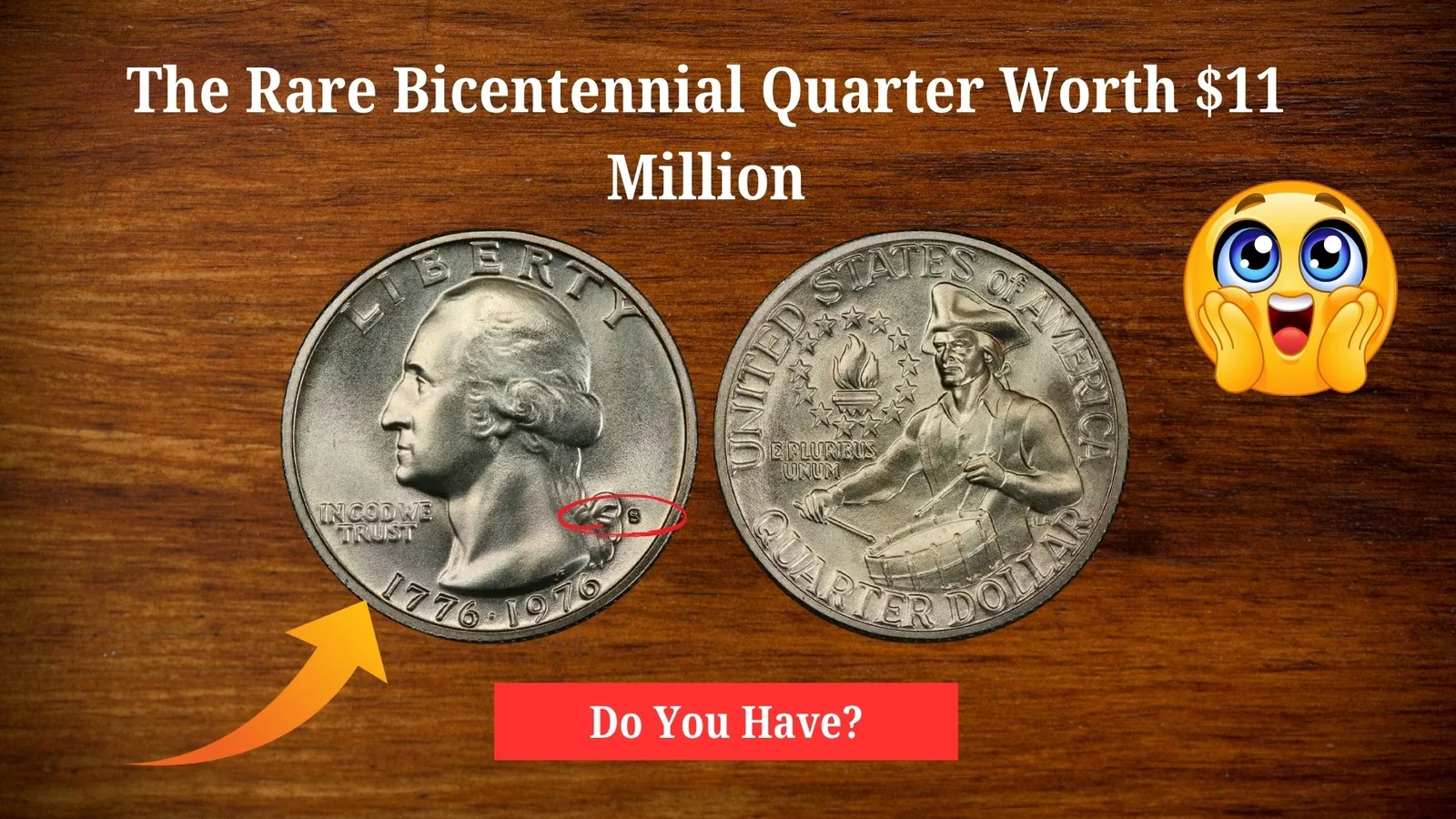

Imagine fishing out a shiny 1976 quarter from your change — the one with a drummer boy on the back — and realizing it’s not just spare change but potentially worth millions. That’s the story fueling headlines, collector chatter, and viral social posts across the country. One of these Bicentennial quarters reportedly sold for $11 million, a number so outrageous it’s hard to believe — but it’s also what’s making everyone double-check their pocket change right now.
Let’s cut through the hype and look at what’s real, what’s rare, and what’s possible if you stumble upon one of these historic coins.
The Bicentennial Quarter: A Snapshot of American Celebration
In 1976, the U.S. Mint decided to do something special for the nation’s 200th birthday. Instead of the usual eagle design, the Mint issued a quarter with a colonial drummer on the reverse — a nod to Revolutionary War heritage. The obverse still featured George Washington, but with a dual date: “1776–1976.”
Billions of these “drummer boy” quarters were struck for circulation, mostly in copper-nickel. A smaller number were minted in 40% silver for collectors, primarily at the San Francisco Mint. That’s where things get interesting: among those billions, a few coins emerged with unusual traits — minting errors, misstrikes, or metal mix-ups — that pushed their value far beyond pocket change.

What’s Behind the $11 Million Quarter Story
Before you start tearing through your couch cushions, here’s the reality. Most Bicentennial quarters are worth exactly 25 cents. But a handful with documented mint errors or rare compositions can reach thousands, occasionally even hundreds of thousands.
The viral “$11 million” claim likely refers to a unique prototype or error coin — possibly struck on the wrong metal or with double impressions — that caught fire at auction. A perfect, uncirculated (or “mint state”) condition only adds to the frenzy.
Here’s what typically drives value:

1. Minting Errors
Mistakes during the coin’s creation can make it one of a kind:
- Double Die Errors: Design details like text or images appear doubled.
- Wrong Metal (Planchet Errors): A few quarters were struck on silver blanks meant for half dollars or proof sets.
- Off-Center Strikes: Portions of the design are missing or misplaced.
2. Silver Composition
Most Bicentennial quarters are copper-nickel, but silver-clad versions (weighing 5.75–6.3 grams) were minted for collector sets. Some of those silver pieces may have accidentally entered circulation.
3. Condition
Coin grading services like PCGS or NGC assess condition on a 1–70 scale. Anything MS-65 or above is top-tier and can multiply value dramatically.

4. Rarity & Demand
Collectors crave unusual finds. If just one coin combines all the above — error, silver, pristine condition — it becomes auction gold. That’s why a single Bicentennial quarter might command an eye-popping bid.
How to Spot a Rare Bicentennial Quarter
Think you’ve found something special? Here’s a simple at-home checklist before you dash to a coin shop.
| Feature | What to Look For | Why It Matters |
|---|---|---|
| Date & Design | “1776–1976” with drummer boy reverse | Identifies the commemorative issue |
| Metal Color | Bright silver tone, no copper edge | Could indicate 40% silver |
| Mint Mark | “S” = San Francisco (proof/silver); “D” = Denver; none = Philadelphia | Silver or proof issues mostly from San Francisco |
| Weight | ~5.67g for clad; ~5.75–6.3g for silver | Silver versions are slightly heavier |
| Errors | Doubled letters, off-center strikes, missing details | Major value driver |
| Condition | Shiny, no scratches, sharp relief | Essential for collector appeal |
Quick DIY Tests
- Magnet test: Silver quarters are not magnetic.
- Edge test: Regular clad coins show a copper stripe on the edge; silver quarters show a solid silver edge.
- Side-by-side: Compare color and shine with a normal 1990s quarter — silver coins have a cleaner, whiter tone.
If you think yours fits the bill, don’t clean it (ever), and get it professionally graded before selling.

Where to Search for One
Finding a valuable Bicentennial quarter is more likely in collections or rolls than in circulation, but hey — it happens.
- Pocket change: Always worth checking; silver tones stand out.
- Bank rolls: Buy $10 rolls of quarters and scan through them.
- Estate sales and flea markets: Old jars and inherited sets can hide surprises.
- Collector forums: Online groups like Reddit’s r/coins or the ANA’s member network share real-world finds.
What to Do if You Strike Gold
- Don’t clean or polish the coin — it destroys collector value.
- Store it properly in a protective holder or coin flip.
- Authenticate it with a professional grading service such as PCGS or NGC.
- Get appraised by a trusted numismatist or local coin dealer.
- Consider your sale options: Private collectors, coin shows, or major auction houses like Heritage Auctions.
Why the Hunt Still Thrills Collectors
Beyond the dollar signs, these coins tap into something deeper — the nostalgia of America’s bicentennial celebration, the artistry of the drummer boy design, and the “what if?” dream that keeps treasure hunters searching through pocket change.
Coin collecting blends history, economics, and luck in one hobby. Every find — whether it’s a $5 proof or a rare $50,000 error — is a reminder that ordinary objects can carry extraordinary stories.

FAQs
Are Bicentennial quarters still in circulation?
Yes, billions were minted. You can still find them in circulation, though most are worth face value.
How can I tell if mine is silver?
Check the coin’s edge. If there’s no copper line and it feels slightly heavier, it could be a silver issue.
What’s the highest confirmed sale price for a Bicentennial quarter?
Verified sales have reached into the tens of thousands, not millions.
Should I collect Bicentennial quarters?
Absolutely — even if yours isn’t rare, the design and history make it a great collectible.