
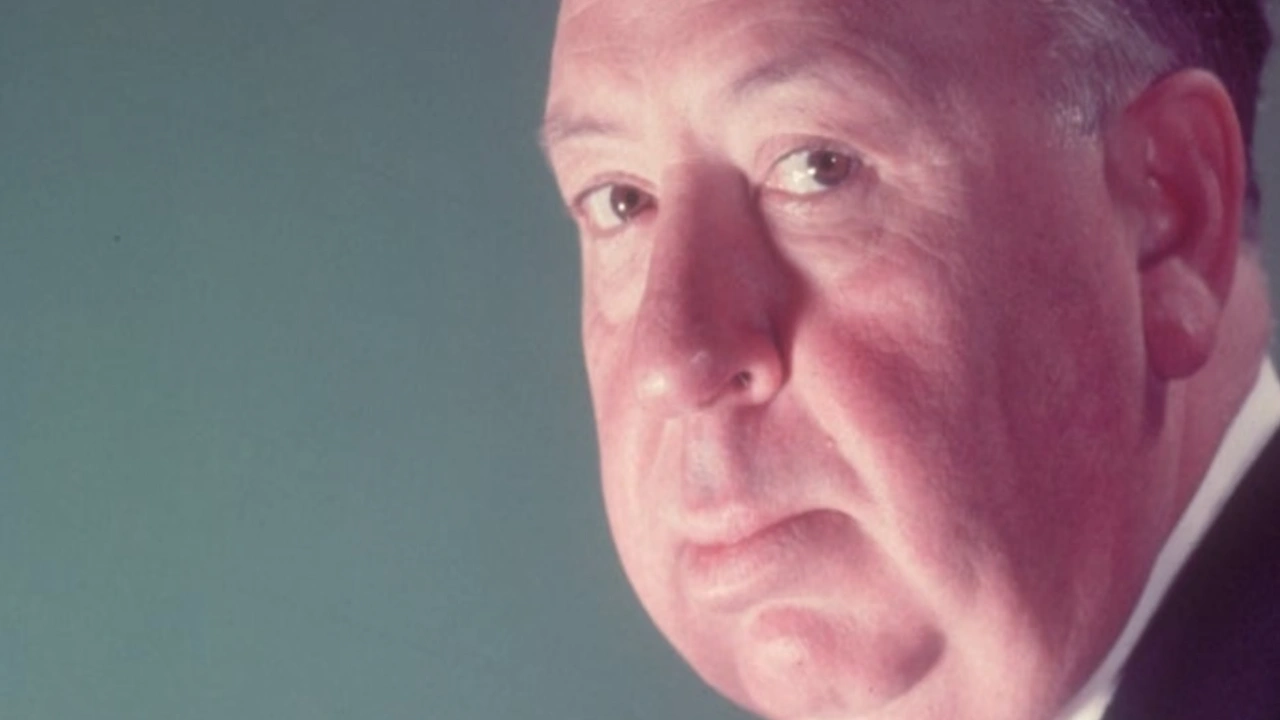

Alfred Hitchcock, one of cinema’s most influential directors, left behind more than just a collection of timeless thrillers—he also built an extraordinary fortune that reflected his sharp business instincts. At the time of his death in 1980, Hitchcock’s net worth was estimated at $65 million, which would equal about $250 million today after inflation. Best known for masterpieces like Psycho, Vertigo, and Rear Window, Hitchcock’s 60-year career transformed the thriller genre and established him as “The Master of Suspense.”
Early Life and Career Beginnings
Born on August 13, 1899, in Leytonstone, England, Alfred Joseph Hitchcock was the youngest of three children. Raised in a working-class Roman Catholic family, he showed an early fascination with storytelling and cinema. After his father’s death, Hitchcock began working at the Henley Telegraph and Cable Company while taking night classes in art and design. His passion for film led him to join Islington Studios in 1919 as a title-card designer, marking the beginning of a remarkable journey.

By 1925, he had directed his first feature, The Pleasure Garden. His 1927 thriller The Lodger: A Story of the London Fog became a critical success, cementing his reputation as a director who could blend fear, suspense, and dark humor like no other.

The “Psycho” Payday: A Genius Business Move
Hitchcock’s most lucrative deal came from his 1960 film Psycho. Rather than taking a traditional salary, he negotiated for 60% of the film’s profits—a move that netted him roughly $15 million at the time (about $160 million today). Later, he traded his ownership stake in Psycho and his TV series Alfred Hitchcock Presents for 150,000 shares of MCA, Universal Pictures’ parent company. By the time of his death, those shares alone were worth over $10 million, bringing his total earnings from Psycho to an estimated $200 million in today’s terms.

Hollywood Success and Honors
Hitchcock directed over 50 films, including North by Northwest (1959), The Birds (1963), and Vertigo (1958)—the latter often cited as one of the greatest films ever made. He received five Academy Award nominations for Best Director, won two Golden Globes, and earned lifetime achievement honors from the BAFTA, AFI, and Directors Guild of America.

In 1979, Queen Elizabeth II knighted him for his contributions to cinema—just months before his passing in April 1980.

The Legacy of a Cinematic Visionary
Alfred Hitchcock’s influence remains unmatched. From camera innovations to narrative suspense techniques, his fingerprints can be seen in countless modern films. His calculated financial decisions, paired with his cinematic genius, ensured that his legacy extended beyond film into financial and cultural immortality.
At the time of his passing, Hitchcock’s estimated $65 million net worth not only reflected his box-office triumphs but also his mastery of both art and business—truly making him a legend in every sense.