
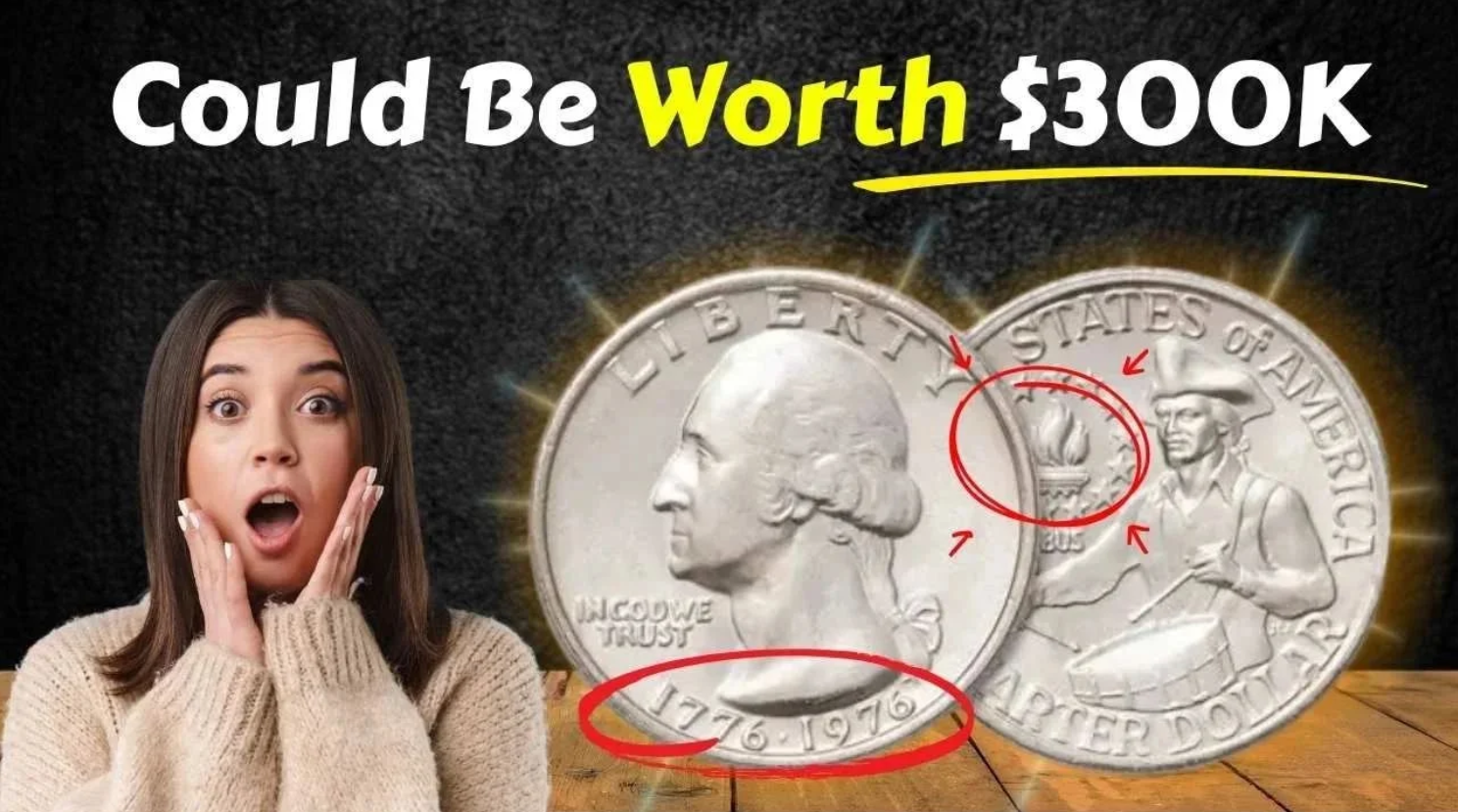

Ever notice that drummer boy staring back at you from an old quarter? Maybe you tossed it in a jar, thinking it was just another relic from the 70s. But what if that coin — the 1976 Bicentennial Quarter — could be worth more than your entire coin collection combined? In some cases, we’re talking six figures. No kidding.
The Bicentennial Quarter wasn’t just pocket change; it was America celebrating its 200th birthday — a tiny metallic tribute to history. Most of them, sure, are worth a modest 25 cents. But a few rare versions, especially those struck in silver or bearing minting errors, have turned into serious collector gold. Let’s unpack how that happened, what makes these quarters special, and how to tell if you’ve been carrying around a small fortune all along.
A Coin Born from Patriotism
In 1975 and 1976, the U.S. Mint rolled out a new design to mark the country’s bicentennial. Gone was the familiar eagle on the back. In its place stood a proud colonial drummer boy, flanked by a torch and 13 stars for the original colonies. On the front, George Washington remained — but with a twist. Instead of a single date, the quarter read “1776–1976.”
The Mint struck over 4 billion of these coins in copper-nickel for everyday circulation. But here’s where things get interesting: a limited number were made in 40% silver, mostly for collectors, at the San Francisco and Denver Mints. Some of those silver proofs accidentally slipped into regular circulation, blurring the line between common and collectible.

That’s the beauty of the Bicentennial Quarter — mass production meets accidental rarity.
Why Some Bicentennial Quarters Are Worth a Small Fortune
Most drummer boy quarters you’ll find jingling in your pocket aren’t worth more than their face value. But in the right combination — silver composition, mint errors, and high condition — they can soar in value.
A few reasons these coins fetch jaw-dropping prices:

- Metal composition: Silver versions weigh around 5.75 grams, slightly more than the standard 5.67 grams copper-nickel ones.
- Minting errors: Doubled dies, off-center strikes, and rare circulation proofs can send collectors into a frenzy.
- Condition: Coins graded MS-65 or higher by professional services like PCGS or NGC command top dollar.
It’s the numismatic version of winning the lottery — a one-in-a-billion coin worth up to $300,000.
How to Tell If Your 1976 Quarter Is Rare
Before you start digging through every old coin jar, here’s what to check:
- Look at the edges: If you see no copper-colored stripe and the coin looks silver all around, it might be a 40% silver edition.
- Weigh it: A precision scale helps — silver quarters tip the scale just a bit heavier.
- Check the mint mark: A tiny “S” below Washington’s portrait means it was minted in San Francisco, often signaling a silver proof.
- Hunt for errors: Doubling in the text, off-center drummer designs, or missing details are worth a closer look.
If your coin checks even one of these boxes, it’s time to get it authenticated. A certified grading can boost its value exponentially.

Record-Breaking Bicentennial Quarters
Here’s where the jaw-dropping numbers come in. Some of these coins have gone from pocket change to life-changing:
- In 2024, a silver off-center strike Bicentennial Quarter graded MS-67 reportedly sold for $300,000 at auction.
- Another doubled die proof version pulled in $150,000.
- Even standard silver proofs in mint condition can bring in $5,000–$10,000.
With circulation errors involving silver coins estimated to number under a thousand, you can see why collectors lose their minds over a find like this.
| Feature | Regular Bicentennial Quarter | Rare Silver Bicentennial Quarter |
|---|---|---|
| Material | Copper-Nickel Clad | 40% Silver |
| Weight | 5.67 grams | 5.75 grams |
| Common Value | $0.25 | $50–$500 (circulated) |
| Top Collector Value | $5 (worn) | Up to $300,000 (graded or with errors) |
Tips for Aspiring Coin Hunters
If you’ve just realized your junk drawer might contain a tiny time capsule, here’s how to handle it smartly:

- Don’t clean it. Ever. Cleaning ruins the coin’s natural patina and slashes its value.
- Store it safely. Use coin flips, capsules, or archival sleeves.
- Get it graded. Professional authentication from PCGS or NGC verifies condition and rarity — the key to serious offers.
- Network with other collectors. Join local coin clubs, online forums, or check out events listed by the American Numismatic Association. You’ll pick up insider tips and maybe even swap your way to a treasure.
- Follow auctions. Sites like Heritage Auctions regularly showcase rare Bicentennial coins, offering a glimpse at what collectors are paying today.
The 1976 Bicentennial Quarter isn’t just a shiny bit of nostalgia — it’s a piece of living American history. Sure, most are only worth a quarter, but a few rare ones can buy you a car, a college fund, or even a house.
So before you dismiss that drummer boy coin in your change jar, take a closer look. Grab a magnifying glass, check the edge, and maybe weigh it. Who knows? You might be holding a $300,000 slice of the nation’s 200-year celebration — and not even know it.
FAQs
Are all 1976 Bicentennial Quarters valuable?
No — most are common. Only silver strikes or coins with significant minting errors carry substantial value.

How can I tell if my Bicentennial Quarter is silver?
Check the coin’s edge. If it lacks the typical copper-colored stripe and feels heavier, it’s likely silver.
Where can I sell a valuable Bicentennial Quarter?
Consider auction houses like Heritage Auctions or certified dealers. Always have the coin graded first.
What’s the most expensive Bicentennial Quarter ever sold?
A rare 1976 silver off-center strike coin graded MS-67 sold for around $300,000 in 2024.
Should I polish or clean old coins before selling them?
Never. Cleaning can destroy the coin’s surface and dramatically lower its value.